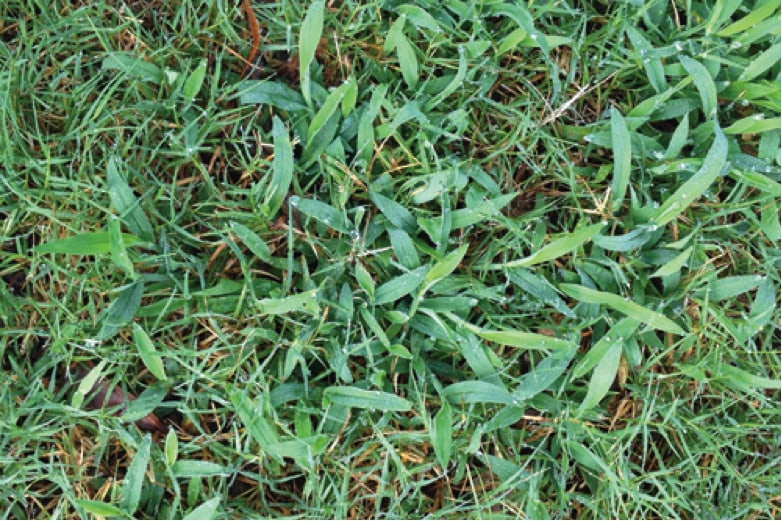
When dealing with a weed that has such a high reproductive rate, the most effective way to cut down on crabgrass is to prevent the weed from sprouting in the first place.
This may sound simple enough, but digging out the weed from the soil isn’t always enough. Crabgrass seeds are sneaky and can remain viable in the soil for up to three years!
Pre-emergent herbicides are key for preventing the growth of seedlings, but the timing of the application has to be just right.
Preventative treatment should be applied before the crabgrass emerges from the soil. Typically, crabgrass begins to germinate once soil temperature exceeds 55 to 60 degrees fahrenheit for at least one week.
For many regions of the U.S., soil temperatures grow warm enough to support crabgrass in the spring. Southern regions can reach this point as early as February, while northern zones generally don’t enter the crabgrass germination period until April.
To prevent future crabgrass invasions in your lawn, keep these temperatures and dates in mind. A TruGreen PhD-certified specialist can help you create a tailored lawn care plan that includes pre-emergent treatment and weed control.







 Back to all blogs


Facebook
X
Youtube
Copy Link
Email